Centralizing historical data streamlines everyday work at HUS Diagnostic Center
reading time
4 minutes
published
edited
Summary
At HUS Diagnostic Center, historical data from pathology, genetics, and specialized hematology has been centralized in the My+ History Data Service.
Around 7 million sample and laboratory test records were transferred to the My+ History Data Service.
Historical laboratory test data can now be found in one place, which makes it easier to compare previous findings and supports diagnostic decision-making.
At HUS Diagnostic Center, historical laboratory test data from pathology, genetics, and specialized hematology is now available in one place: the My+ History Data Service. Previously, this data was handled across several different systems, making it cumbersome to use in daily work. Centralizing the historical data has streamlined how it is used and made it easier for experts to review patient-specific information.
In a project carried out at HUS Diagnostic Center in spring 2026, historical data from pathology, genetics, and specialized hematology laboratory tests was migrated to the My+ History Data Service.
Around seven million sample and laboratory test records were transferred to the My+ History Data Service. In the future, the service can also be expanded to include historical data from microbiology, clinical chemistry, and hematology.
Historical data is more than an archive
Test history accumulated over decades is a vital part of today’s diagnostics. Historical data is not simply archived information; it is actively used to assess previous findings and to build a comprehensive picture of the patient’s situation. Being able to revisit previous tests helps experts evaluate changes over time and supports diagnostic decision-making.
The benefits shown in practise
“The change has streamlined how we use data in our daily work, now that overlapping systems have been phased out and historical data can be accessed from a single location,” says Jenni Winter, Digital Coordinator for Pathology Laboratories at HUS Diagnostic Center.
The primary role of the My+ History Data Service is to provide access to patient-specific diagnostic history. The same historical data can also be utilized through My+ Data Analytics, enabling broader searches and reporting capabilities. Together, these solutions complement one another and support the effective use of information in daily work as well as in research and development activities.
“The My+ History Data Service has been most valuable in situations where a quick overview of a patient’s previous tests and findings is needed,” Winter explains.
The My+ History Data Service has been particularly useful in:
diagnostic work, where previous tests, samples, and findings are regularly reviewed
comparisons, where changes over time need to be evaluated
cases where the patient has an extensive test history
The availability of historical data also supports multidisciplinary team meetings, where a patient’s case is reviewed collaboratively across specialties. Centralized historical data makes it easier to compare previous findings and build a complete picture of the patient’s situation.
The centralization of historical data was an important step away from separate legacy systems toward a more manageable system environment. With information available in a more centralized way, maintenance becomes simpler and workflows become clearer for users,” says Jukka Kovanen, Information Systems Manager at HUS Diagnostic Center.
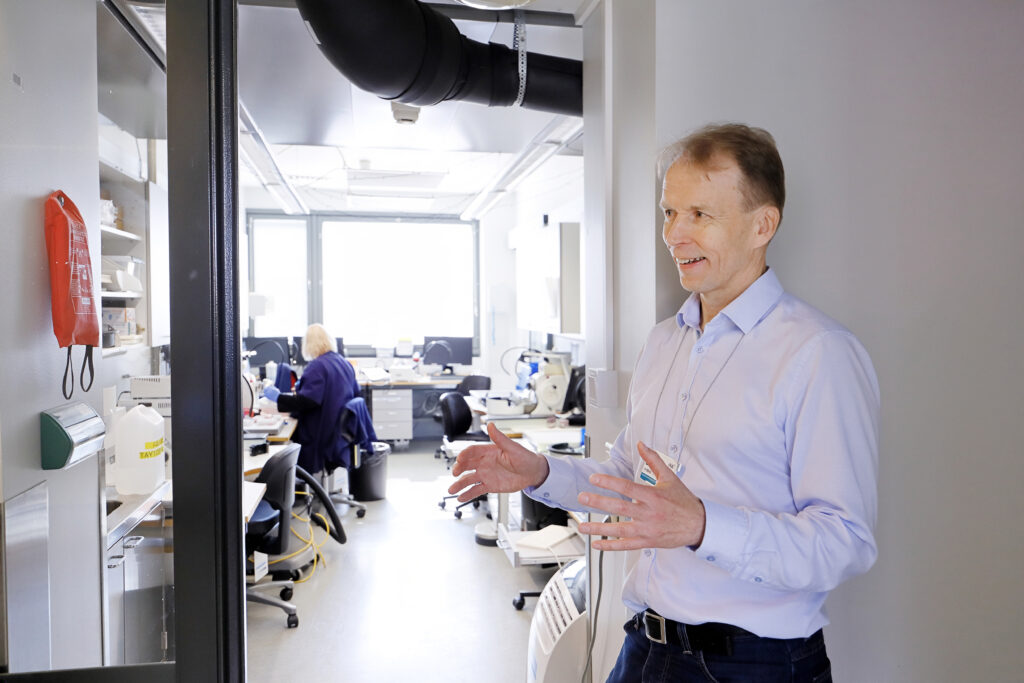
Jukka Kovanen sees the centralization of historical data as an important part of a more manageable overall system environment at HUS Diagnostic Center.
Close collaboration enabled a successful implementation
“This agile software development and implementation project was carried out in close collaboration between experts from HUS Diagnostic Center and Mylab. Due to the specialized nature of the data, the customer’s experts did excellent work in validating it. The deployment was carried out in phases without any interruptions to data availability or operations,” says Paula Saastamoinen, Project Manager at Mylab.
HUS Diagnostic Center is Finland’s leading provider of clinical laboratory and medical imaging services. The organization analyzes over 25 million laboratory tests each year, and its activities cover a range of diagnostic specialties.
HUS Diagnostic Center and Mylab are long-standing partners, and HUS Diagnostic Center uses Mylab’s My+ Diagnostic Intelligence, which integrates data from various diagnostic specialties into a unified solution. The unified data model behind the solution supports efficient use of data as well as future analytics and AI capabilities.